Netflix Content Strategy Analysis
Analyzed Netflix’s content dataset to uncover patterns in genre popularity, release trends, and content distribution across regions. The goal was to identify key factors that influence viewer engagement and provide data-driven recommendations for content strategy and platform growth.
Year
2026
Client
Self-Initiated Project
Role
Tools
Python (Pandas, NumPy), SQL, Jupyter Notebook, Matplotlib/Seaborn, Excel

Overview
What insights can we uncover from Netflix’s content library?
Netflix’s content library reveals patterns across content type, geographic production, genre distribution, and platform growth over time. This project examines these trends to better understand how content strategy aligns with global expansion and audience demand.
Problem
Netflix hosts a vast catalog of content, but without structured analysis, identifying meaningful patterns in content distribution, regional contributions, and evolving trends becomes difficult. This lack of visibility limits data-driven decisions around content investment, market expansion, and audience engagement.
Solution
Using Python and data visualization, this project examines trends in content type, country distribution, genre frequency, and growth over time.
The results reveal key patterns in Netflix’s content strategy and highlight opportunities for more targeted, data-driven decision-making.
Context
Understanding Netflix’s Content Landscape
Streaming platforms have rapidly expanded their global reach, with Netflix emerging as one of the largest content distributors. As competition increases, understanding content trends, regional production, and audience preferences becomes essential for strategic decision-making.
Netflix’s content library offers insight into how content is distributed across genres, countries, and time, revealing patterns that reflect platform growth and evolving content strategies.
Exploring Netflix’s dataset to identify key patterns and variables
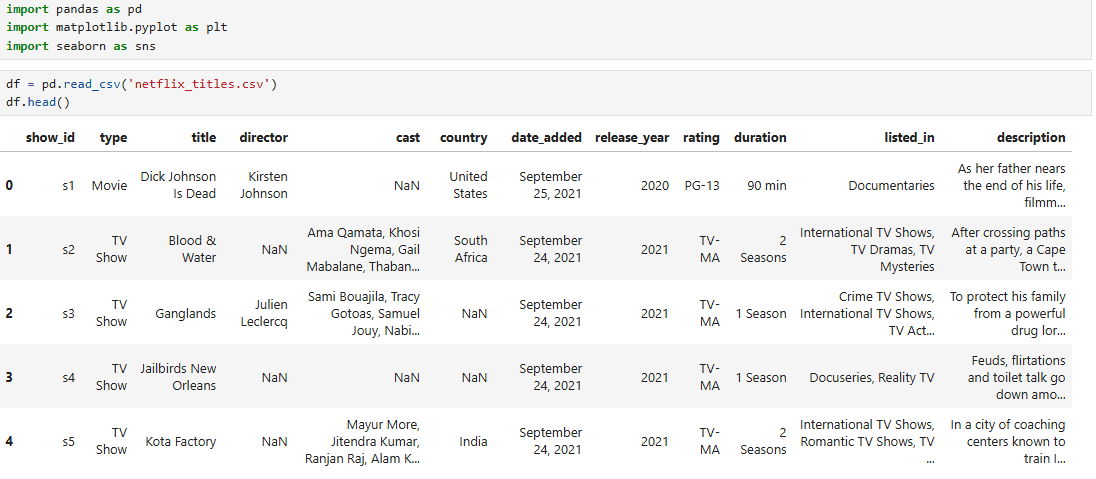
The dataset was explored using Python, focusing on content type, genre, country of production, and release year.
Initial data cleaning and preprocessing addressed missing values, standardized formats, and prepared the data for analysis, ensuring accuracy and consistency in identifying meaningful patterns.
Analysis Objectives
Key questions guiding the analysis
What is the distribution of movies vs. TV shows on Netflix?
Which genres are most frequently represented in Netflix’s catalog?
Which countries contribute the most to Netflix content production?
How has Netflix’s content library grown over time?
What trends reflect Netflix’s global expansion and content strategy?
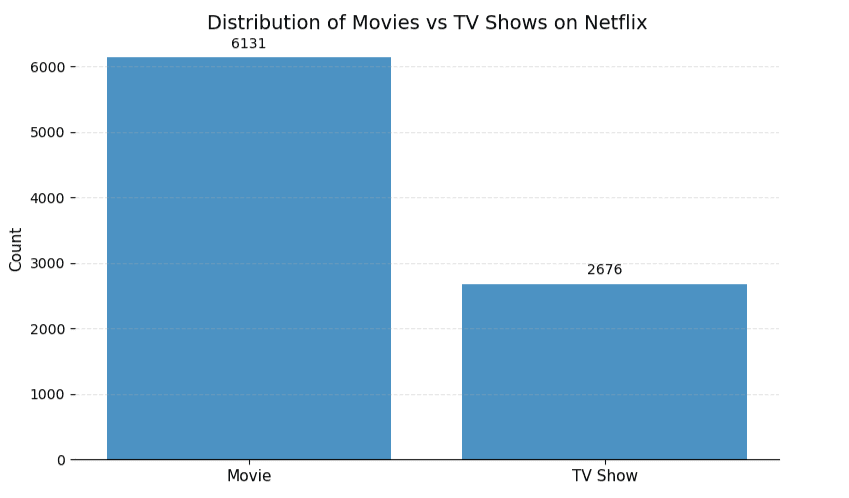
Netflix’s catalog is heavily dominated by movies, which significantly outnumber TV shows. This suggests a strategic emphasis on film content due to faster production cycles and broader scalability.
Patterns identified from Netflix’s content data
Content Type Distribution
Netflix’s catalog is heavily dominated by movies, which significantly outnumber TV shows. This indicates a strategic emphasis on film content, likely due to faster production cycles and broader global scalability.
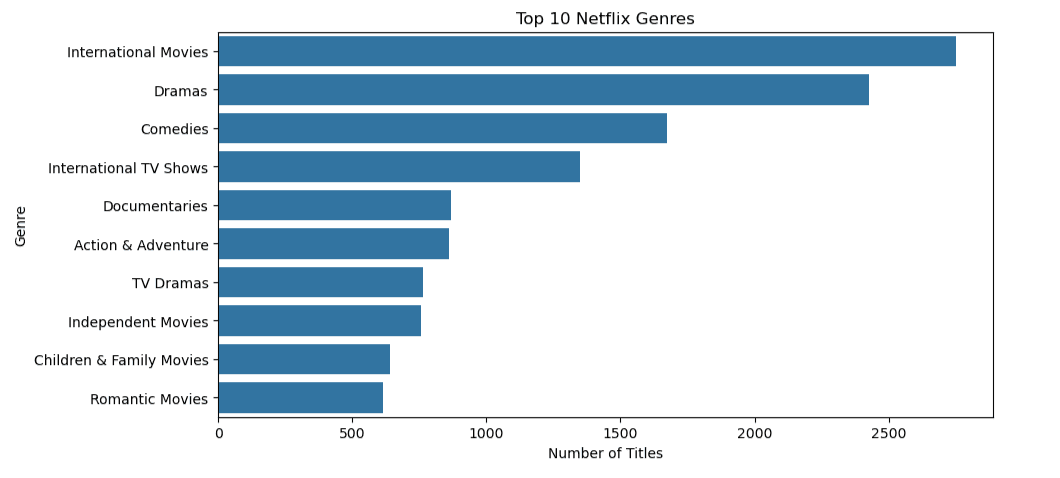
Genre Popularity
Genres such as Drama, International Movies, and Comedies appear most frequently across Netflix’s catalog, reflecting a focus on widely accessible, globally appealing content.
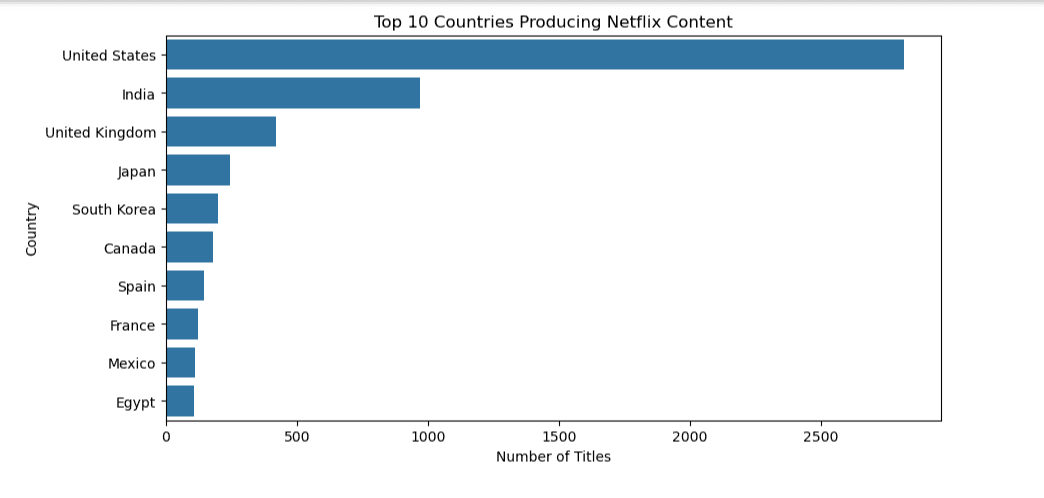
Global Content Distribution
Content production is concentrated in a few key countries, with the United States leading significantly. The presence of countries such as India and the United Kingdom highlights a growing investment in international content, reflecting Netflix’s global expansion strategy.
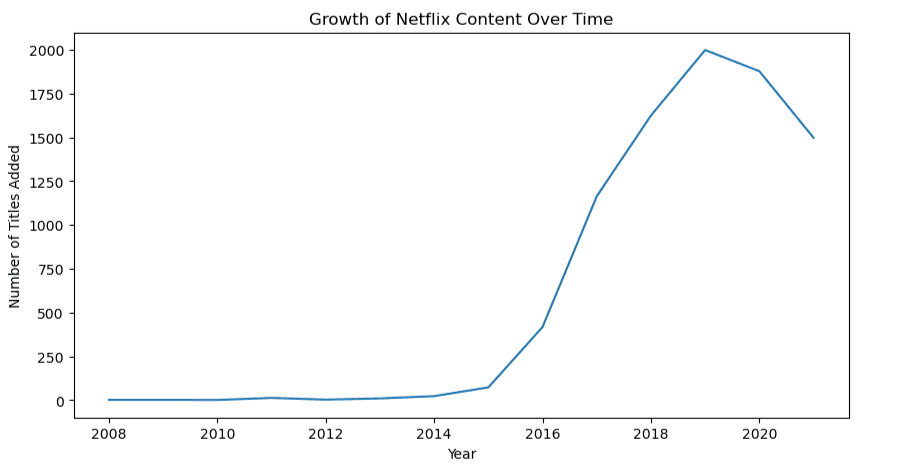
Content Growth Over Time
Netflix’s content library has grown rapidly over time, with a significant increase after 2015. This growth aligns with the platform’s expansion into international markets and increased investment in original content.
Approach to data cleaning, transformation, and analysis
The analysis was conducted using Python, leveraging libraries such as Pandas and Matplotlib to clean, process, and visualize Netflix’s dataset.
The workflow included data preprocessing, handling missing values, and transforming categorical fields such as genres and countries to improve accuracy.
Key steps involved splitting multi-value columns, aggregating data to identify trends, and creating visualizations to uncover patterns in content distribution, geographic production, and growth over time.
Workflow & Analysis Pipeline
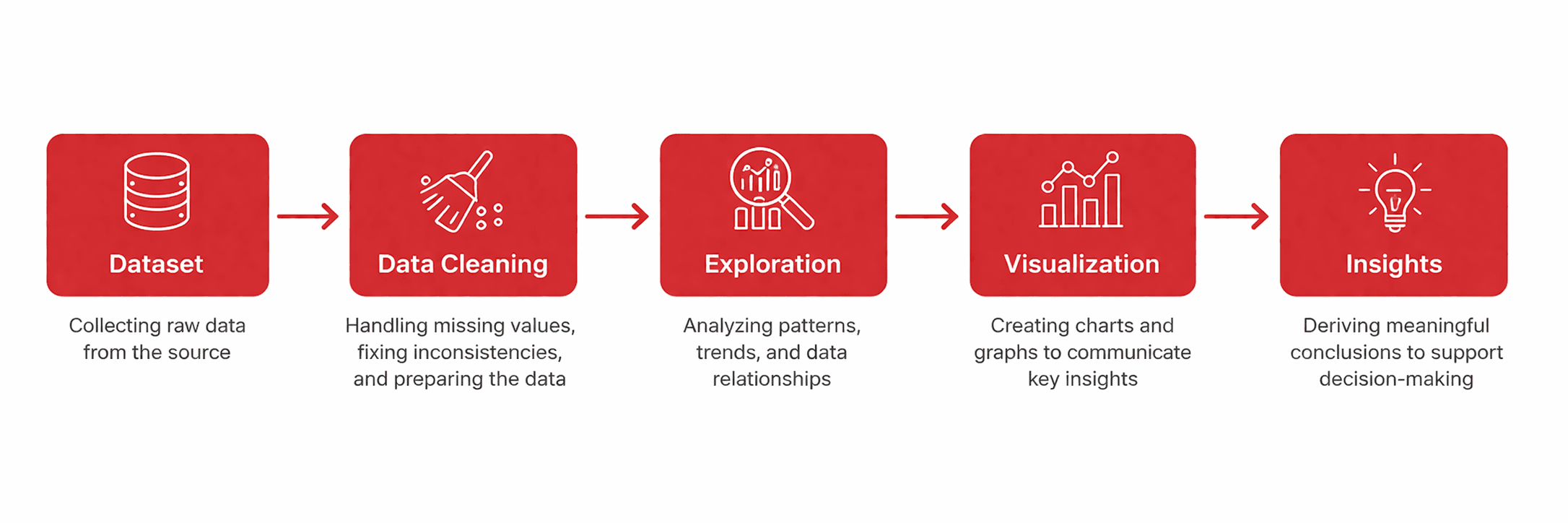
A structured workflow was used to transform raw Netflix data into meaningful insights. The process began with data loading and cleaning, followed by exploratory analysis to identify patterns across content type, genre, country, and time.
Preprocessing steps included handling missing values, splitting multi-value fields, and aggregating data for visualization. The final stage focused on generating visual insights to support conclusions about Netflix’s content strategy.
Tools & Technologies
Technologies used to conduct the analysis
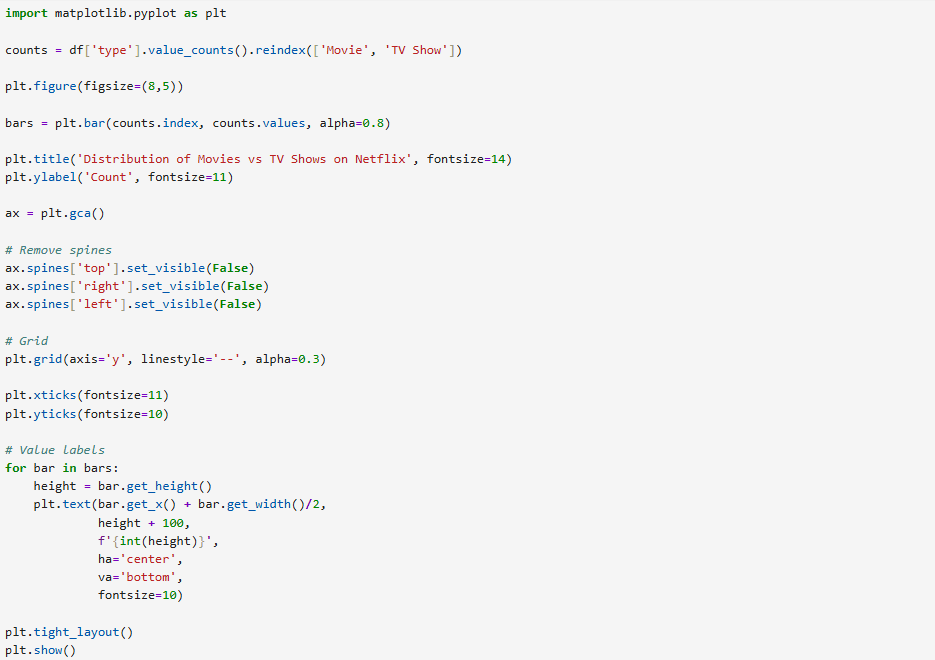
Python was used for data analysis, with Pandas handling data manipulation and cleaning, and Matplotlib used for visualization.
Jupyter Notebook served as the primary environment for exploratory analysis, enabling an interactive workflow that combines code, outputs, and insights.
Conclusion & Key Takeaways
What the analysis reveals about Netflix’s content strategy
The results reveal key patterns in Netflix’s content strategy, including a strong emphasis on movies, a growing investment in international content, and continued expansion of its content library over time.
Netflix prioritizes scalable, globally appealing content while continuing to diversify its offerings across regions and genres.
These findings demonstrate how data analysis can uncover meaningful trends that support strategic decision-making in the streaming industry.